Best powder ski resorts in Nagano & Hakuba: 10-winter snowfall ranking
Top 15 Nagano and Hakuba powder ski resorts ranked by 10-winter Dec–Mar and Jan–Feb mid-band snowfall, >=5 cm snow days, elevation, pistes, lifts, and drives.

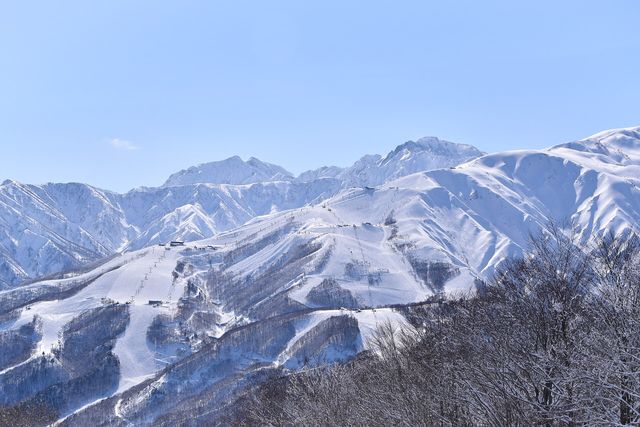
Nagano sits directly behind the first Sea of Japan ridgeline of central Honshu, where cold Siberian northwest monsoons slam into the Northern Japan Alps and the northern Shinetsu highlands and dump vast winter totals. Unlike coastal Niigata plains where valley bases drop near sea level, Nagano's ski areas pair heavy moisture fetch with substantially higher terrain—bases run from 434 m to 1,706 m and summits climb as high as 2,169 m—giving powder skiers longer vertical drops and colder upper-mountain snowpacks.
Across the 15 snowiest lift-served resorts in Nagano and the Hakuba Valley, ten-winter (2016–2025) Open-Meteo mid-band averages span 344 cm to 675 cm from December through March, with 184 cm to 392 cm falling in January–February and 24 to 48 snow days recording at least 5 cm per winter. Nozawa Onsen tops the ranking at 675 cm (392 cm in January–February and 48 snow days), edging out Hakuba Valley's Tsugaike Kogen at 666 cm (46 snow days), Hakuba 47 at 615 cm, and Hakuba Happo-One at 610 cm.
While every resort on the table lists domestic Matsumoto Airport (MMJ) as its closest air gateway at 52 to 96 min by road, most international visitors fly into Haneda or Narita and ride the Hokuriku Shinkansen into Nagano or Iiyama Station before transferring by bus or car—see our Tokyo airport to Japan Alps transfer guide for routing detail. Because subtle shifts in wind direction decide whether the Hakuba Valley or northern Shinetsu peaks around Nozawa and Madarao get the deepest overnight storm, track active weather on the Nagano snow forecast leaderboard, check the Japan snow forecast leaderboard, and compare Nagano with Niigata in our snowiest ski resorts in Japan report.
Top 15 Nagano & Hakuba powder ski resorts by 10-winter snowfall
| Resort | Dec–Mar snow (cm) | Jan–Feb snow (cm) | Snow days (>=5 cm) | Base / Summit (m) | Piste (km) | Lifts | Nearest airport |
|---|---|---|---|---|---|---|---|
| Nozawa Onsen | 675 cm | 392 cm | 48 days | 613 / 1,489 m | 41.9 km | 17 | Matsumoto (MMJ), 96 min |
| Tsugaike Kogen | 666 cm | 369 cm | 46 days | 838 / 1,575 m | 34.3 km | 15 | Matsumoto (MMJ), 68 min |
| Hakuba 47 | 615 cm | 354 cm | 42 days | 926 / 1,586 m | 12.7 km | 6 | Matsumoto (MMJ), 64 min |
| Hakuba Happo-One | 610 cm | 352 cm | 42 days | 801 / 1,687 m | 30.7 km | 22 | Matsumoto (MMJ), 66 min |
| Hakuba Norikura Onsen Ski Resort | 559 cm | 330 cm | 39 days | 852 / 1,430 m | 10.9 km | 9 | Matsumoto (MMJ), 66 min |
| Togakushi Ski Area | 544 cm | 306 cm | 38 days | 1,270 / 1,653 m | 15.0 km | 7 | Matsumoto (MMJ), 86 min |
| Tangram Madarao Ski Circus | 461 cm | 262 cm | 32 days | 808 / 1,231 m | 10.5 km | 5 | Matsumoto (MMJ), 84 min |
| Kurohime Kogen | 461 cm | 262 cm | 32 days | 790 / 1,060 m | 7.9 km | 6 | Matsumoto (MMJ), 86 min |
| Jiigatake Snow Resort | 444 cm | 242 cm | 33 days | 926 / 1,115 m | 5.5 km | 5 | Matsumoto (MMJ), 52 min |
| Kashimayari Snow Resort | 444 cm | 242 cm | 33 days | 863 / 1,322 m | 8.3 km | 5 | Matsumoto (MMJ), 61 min |
| Ryuoo Ski Park | 430 cm | 238 cm | 31 days | 878 / 1,890 m | 12.4 km | 12 | Matsumoto (MMJ), 80 min |
| Togari Onsen Ski Resort | 406 cm | 258 cm | 30 days | 434 / 825 m | 12.3 km | 7 | Matsumoto (MMJ), 88 min |
| Hakuba Iwatake | 402 cm | 221 cm | 30 days | 758 / 1,270 m | 20.5 km | 9 | Matsumoto (MMJ), 68 min |
| Kijimadaira Ski Resort | 363 cm | 213 cm | 24 days | 500 / 841 m | 10.3 km | 5 | Matsumoto (MMJ), 82 min |
| Shiga Kogen Yokoteyama Ski Area | 344 cm | 184 cm | 24 days | 1,706 / 2,169 m | 13.2 km | 7 | Matsumoto (MMJ), 87 min |

What stands out in the numbers
- Four mountains top 600 cm and 42 snow days: Nozawa Onsen (675 cm, 48 days), Tsugaike Kogen (666 cm, 46 days), Hakuba 47 (615 cm, 42 days), and Hakuba Happo-One (610 cm, 42 days) form an unmistakable top tier, each averaging well over 350 cm in January–February alone.
- Big-mountain vertical peaks in Kita-Shiga, Happo, and Nozawa: Ryuoo Ski Park posts the table's largest vertical drop at 1,012 m (878 to 1,890 m, 430 cm), followed by Hakuba Happo-One at 886 m (801 to 1,687 m) and Nozawa Onsen at 876 m (613 to 1,489 m). Tsugaike Kogen adds 737 m of vertical alongside the table's second-largest piste network (34.3 km).
- High-elevation cold snow vs peak coastal volume: Shiga Kogen Yokoteyama Ski Area sits dramatically higher than every other Nagano area—its 1,706 m base is higher than the summits of 13 other resorts on this list, reaching 2,169 m—trading total centimetres (344 cm) for colder alpine snow preservation. Togakushi Ski Area bridges both worlds with a 1,270 m base, 1,653 m summit, and 544 cm of winter snow.
- Largest lift and piste hubs cluster in two valleys: Nozawa Onsen leads mapped terrain at 41.9 km (17 lifts), followed by Hakuba's Tsugaike Kogen (34.3 km, 15 lifts), Hakuba Happo-One (30.7 km, table-high 22 lifts), and Hakuba Iwatake (20.5 km, 9 lifts).
How to choose
- Decide between Hakuba's multi-resort valley and a single-village Shinetsu base: Staying in the Hakuba Valley puts Tsugaike Kogen (666 cm), Hakuba 47 (615 cm), Hakuba Happo-One (610 cm), Hakuba Norikura Onsen Ski Resort (559 cm), and Hakuba Iwatake (402 cm) within minutes of each other along one shuttle corridor, all 64 to 68 min from Matsumoto (MMJ). Choosing Nozawa Onsen (675 cm, 41.9 km) trades multi-resort hopping for a traditional hot-spring village directly under Nagano's deepest snow totals and short transfers from Iiyama Shinkansen Station.
- Match elevation to your travel month: During deep January–February cold snaps, lower-elevation bowls like Nozawa Onsen (392 cm Jan–Feb) and Hakuba 47 (354 cm Jan–Feb) run consistently cold and deep. If you are skiing early December or late March, favour higher bases such as Shiga Kogen Yokoteyama Ski Area (1,706 m base), Togakushi Ski Area (1,270 m base), or Ryuoo Ski Park (1,890 m summit).
- Use Tokyo Shinkansen access and live leaderboards to chase storms: Rail connections via Tokyo make it straightforward to pivot between northern Nagano and neighbouring Niigata—review transit options in our flying into Tokyo ski guide and our snowiest ski resorts in Japan table, then check the live Nagano snow forecast leaderboard and Japan snow forecast leaderboard 72 hours out.
Frequently asked questions
Which ski resort in Nagano gets the most snow?
Nozawa Onsen leads Nagano on ten-winter Open-Meteo mid-band snowfall with 675 cm from December through March, 392 cm in January–February, and 48 snow days of at least 5 cm. Tsugaike Kogen in the northern Hakuba Valley is a close second at 666 cm and 46 snow days.
Which Hakuba Valley resort has the best snowfall and terrain?
Tsugaike Kogen records the deepest average snow in Hakuba at 666 cm (369 cm Jan–Feb) across 34.3 km of pistes and 15 lifts. Hakuba 47 averages 615 cm from a 926 m base, while Hakuba Happo-One pairs 610 cm with Hakuba's biggest vertical drop (886 m, 801 to 1,687 m) and highest lift count (22 lifts).
How do Nozawa Onsen and Hakuba Happo-One compare for powder skiers?
Nozawa Onsen averages 65 cm more winter snow (675 cm vs 610 cm), six more >=5 cm snow days (48 vs 42), and more mapped pistes (41.9 km vs 30.7 km) with comparable vertical drop (876 m vs 886 m). Hakuba Happo-One rises 198 m higher (1,687 m vs 1,489 m), has 22 lifts to Nozawa's 17, and connects effortlessly to neighbouring Hakuba mountains.
Which Nagano powder resort has the highest elevation for reliable cold snow?
Shiga Kogen Yokoteyama Ski Area is the highest ski area on the table, spanning 1,706 m to 2,169 m with 344 cm of winter snow. For bigger storm totals paired with high alpine altitude, Ryuoo Ski Park reaches 1,890 m (430 cm) and Togakushi Ski Area starts at a 1,270 m base with 544 cm.
Methodology
Snowfall figures derive from Skinow's ten-winter (2016–2025) Open-Meteo mid-band climatology calculated at each resort's midpoint elevation between OpenStreetMap base and summit points for December–March and January–February. Snow days count December–March calendar days averaging at least 5 cm of modelled snowfall. Piste lengths and lift counts use OpenStreetMap downhill piste and lift tags—excluding unmapped off-piste and freeride routes—with minimum lift and piste filters removing tiny local hills and spring-only stations. Airport drive times represent free-flow road durations from Skinow's routing engine without winter snow-road delays.